
 Local Government Explained
Ones to Watch 2025: your guide to the local elections
Download and share our pdf version of this year's guide
Election results day is here at last! See how reality compares with our predictions 📢
Check out our live updates of the results from yesterday’s Local Elections!
This is your ultimate source for updates, analysis, and commentary.


Foreword
By Jonathan Carr-West, Chief Executive, LGIU
`2025 already feels like one of the most consequential years in living memory for English local government. Facing the twin institutional changes of reorganisation and devolution, against a backdrop of remarkable political upheaval at home and abroad, and never without the acute financial pressures that have come to define the last 15 years for the sector, these elections – limited though they are in number – are set to be both crucial and fascinating.
To start with the big picture. Most of the places up for election this year last held elections in 2021, during the rollout of the Covid-19 vaccine when Boris Johnson was still Prime Minister. It’s fair to say that a lot has changed since then. Even since the landslide Labour victory at the general election last summer, we have seen the re-election of Donald Trump in the United States, a complete upheaval of perspectives on European security, and the recent unprecedented electoral successes of the AfD in the German federal election. Politics is moving fast. Even divorced from all local context (which, as fans of local elections we know is a fool’s errand) there are reasons that these local elections, as with all elections across Europe at the moment, will be Ones to Watch.
What should we be looking out for? For the first time in 15 years we are heading into a set of English local elections under a Labour central government. The usual pattern is that after a big win, the only way to go is down. Labour is at least somewhat defended by the small number of elections in Labour areas this year – which would have been low anyway as a county election year, but has been further diminished by the delays brought about due to reorganisation (more from LGIU on this in our devo and local government reorganisation essentials page here) .
If you are only looking for headlines from these elections, then it would be worth looking out for:
- If the number of Labour councillors drops after a general election victory last year (especially considering they are not defending many seats this year) or if they lose any competitive mayoral races;
- The relative performance of the Conservatives and Reform as the major parties of the right (Reform has a lot to gain and the Conservatives a lot to lose, especially with the strength of Reform in recent polling);
- Whether we see the continuing upward trajectory of the Liberal Democrats and Greens who will be looking to capitalise from the apparent weaknesses of Labour and the Conservatives in national polling.
But the big picture is only one part of the story and, in significant ways, the least important part. Local elections are local decisions. We choose the councillors who ultimately make many of the most consequential decisions for local people: planning, transport, adult and children’s social care, parks, arts, and leisure. These decisions are not trivial or unimportant; they are what make a place worth living in.
Luckily, local electorates are much more likely to remember this than the national fixation on the overall fortunes of the parties might suggest. The remarkable rise of independent candidates, local associations, and the unusual party dynamics that make local elections so interesting are all evidence of how local people don’t always follow national trends.
The councillors and mayors chosen by residents on 1 May will play a vital role in the wellbeing of local places, communities and residents. But let’s also not forget the hugely important role local government plays in the wellbeing of our democracy. And we need to be looking after democracy now more than ever.
Misinformation, mistrust in systems of governance, and bitter divisions seem to have an intractable grip on much of our public life and discourse. Looking around the world it is hard to escape the feeling that democracy is under considerable strain.
In the UK, local government is responsible for this essential – perhaps the most essential – pillar of our society. Councils deliver our elections and LGIU’s newly published research into electoral administration reveals just how overstretched and under-resourced this vital service is. It is crucial that we prevent a hollowing out of electoral services – they are after all the foundation upon which trust, transparency and engagement in our democratic processes are built.
Where are local elections happening?
This is not exactly a big year for elections in England. According to Democracy Club, this is, in terms of the number of councillors up for election, the smallest set of UK council elections since 1975. This is because of a combination of this being a county election year, and there are far fewer county elections than other types, and because many elections that were meant to go ahead this year have been postponed pending local government reorganisation. As we can see in the map below, this included county councils across the East and South East of England, where we might otherwise have expected very interesting elections.
Although delays are not unheard of, their implications are always worth considering. Given the current context of reorganisation, many electors will be either unable to cast a vote this year that they might have expected to, or will be electing councillors for a council that may cease to exist in its current form quite soon. Many more councils applied to have their elections delayed than have actually ended up with delayed elections, and councils like Kent have found that they will be having elections that, until recently, they had hoped would be delayed because the government has not accepted them onto the fast track for devolution.
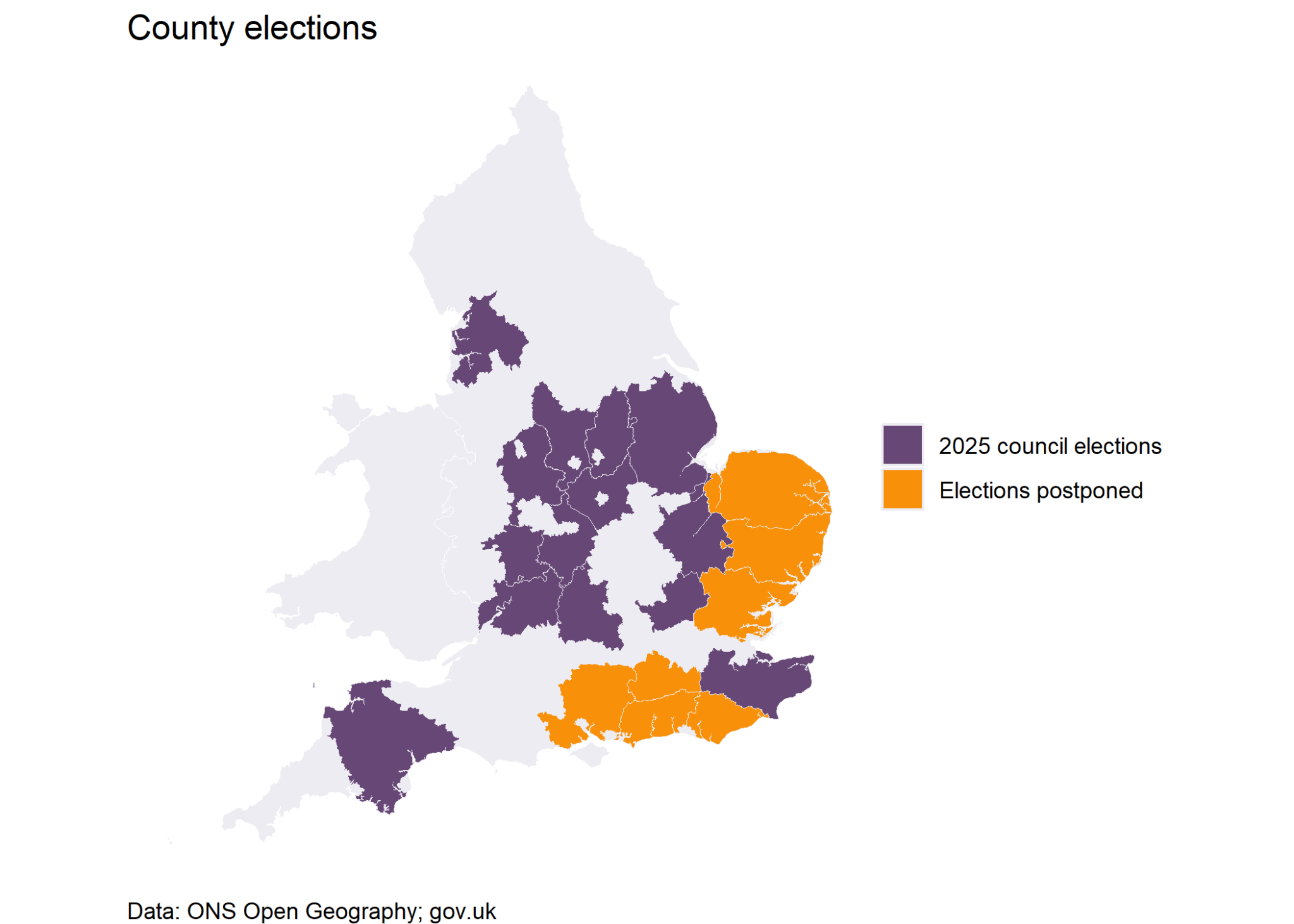
The total number up for election this year has ended up at:
- 14 county elections
- 8 unitaries
- 1 metropolitan district
- the Isles of Scilly
- 4 combined authority mayors
- 2 directly elected mayors that cover a single authority in Doncaster and North Tyneside.
Despite there being only a small number of elections, there is no end of variety thanks to the huge range of different types of councils we have in England. A constitutional situation that may well soon be changing with the onset of local government reorganisation, which promises to change (if not necessarily simplify) the different arrangements of councils in England.
This does not even get into the number of town and parish elections happening which are completely beyond our powers to count. Luckily, if you are interested in town and parish elections – the least-studied type of election in England – this excellent joint project by the National Association of Local Councils and Democracy Club has information on the last set of parish and town elections, which, among other fascinating insights, suggests that there are over 1,250 town and parish elections up this year with over 11,000 seats up for grabs. Look out for their publications explaining the 2025 parish and town results whenever they become available. For many people, parish and town councillors are their closest elected representatives, and with the prospect of many lower-tier councils being merged into bigger units, the very local level could take on an increasingly important role in local representation.
This guide would not have been possible without the excellent open-source data provided on the Open Council Data website, which continues to provide an extraordinary and vital public service to help us all understand local democracy better.
Check out the Democracy Club election finder and our interactive map below to find out the elections happening near you and explore the state of councils at the moment.
Data: ONS Open Geography; Open Council Data; Wikipedia
Powered by Leaflet
Our top five contests to watch
1. Look out for Labour’s seats in Durham, where they are close to a majority and won every seat at the General Election. Their recent polling slump and Reform’s many second-place finishes at the General Election means they face tough opposition to win back a council that they held for a century up until 2021. .
2. Keep an eye out for Kent County Council where the Conservatives are going in with a lot to lose. Their recent council losses in many districts in the area suggest that both the Liberal Democrats and Reform could pick up seats here.
3. Stay on watch for the new Greater Lincolnshire Combined Authority, where former Conservative MP Dame Andrea Jenkins has been selected to run the mayoral race for Reform.
4. In the South West, look out for Gloucestershire County Council to see whether the Liberal Democrats can take control and if the Greens pick up many seats after strong performances in Stroud and the Forest of Dean.
5. Finally, there is only a single Labour defence at the council level – Doncaster. We will all be watching to see if their very substantial majority erodes and they lose control of either the council or the mayoralty there.
Regional analysis
East of England

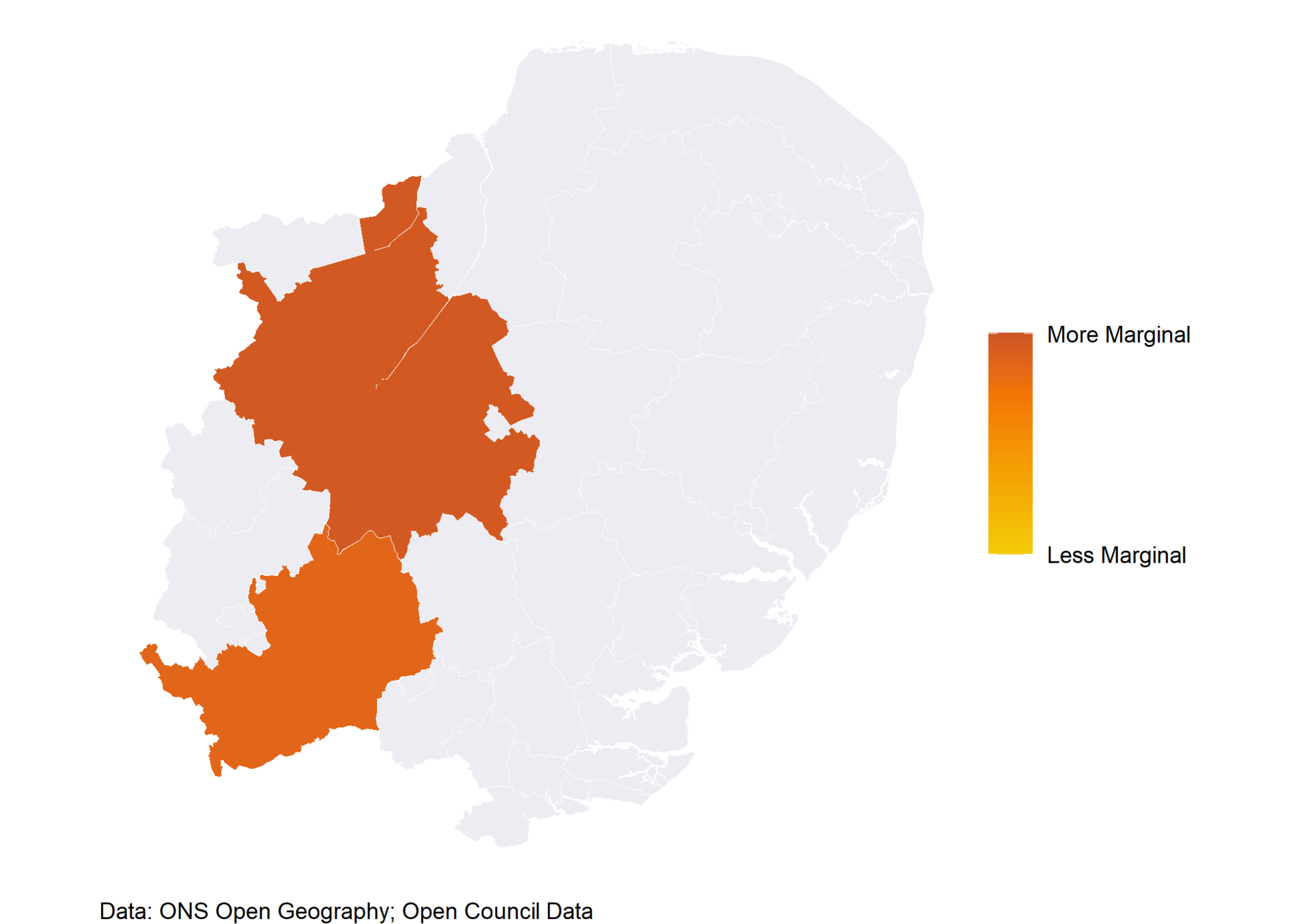
The East of England only has two councils up for election this year, both counties and both, in their own way, important tests of the major parties.
In Cambridgeshire, the Liberal Democrats will be aiming to change their current coalition to a full majority. They’ve gained a couple of seats in the recent county council by-elections, including from their main rivals in the area: the Conservatives. The districts in the area haven’t had any recent elections in the last couple of years which we could use as a barometer for the parties’ fortunes, but the most recent General Election saw a few decisive swings towards the Liberal Democrats from the Conservatives, including in South Cambridgeshire, so you can guarantee they will be hoping for the same again.
Hertfordshire, on the other hand, is a test for the Conservatives, one of many in this set of elections. They have a healthy majority, but Liberal Democrat victory in the council elections in Dacorum in 2023, coupled with several parliamentary constituency losses for the Conservative party across Hertfordshire (where they lost seats to Labour and the Liberal Democrats), suggest that despite their historic strength in the region, they could still be challenged, especially if Reform perform well.
Alongside these two elections, we have the Cambridgeshire and Peterborough combined authority, last elected in 2021, which seems like a very long time ago indeed. The incumbent Nik Johnson, a Labour mayor, presides over a combined authority with members from Labour, Conservative and Liberal Democrat councils. Back in 2021, Nik Johnson won on second-preference votes, but following a change in the rules back in 2022, the election will now be held using First Past the Post, the same as for parliamentary constituencies. This is shaping up to be a very interesting contest, with all three of the big English parties having strong showings across the combined authority, including at the recent general election, and the incumbent Labour mayor stepping down.
The election in this region that many will have been waiting for as a barometer to gauge the comparative strength of Reform UK – Thurrock – has been delayed until 2026. A set of full council elections there after a change in boundaries, and considering the success of Reform UK in the area – one of their MPs is for South Basildon and East Thurrock – meant that it would have been a key test for the party, but we will have to wait another year.
East Midlands
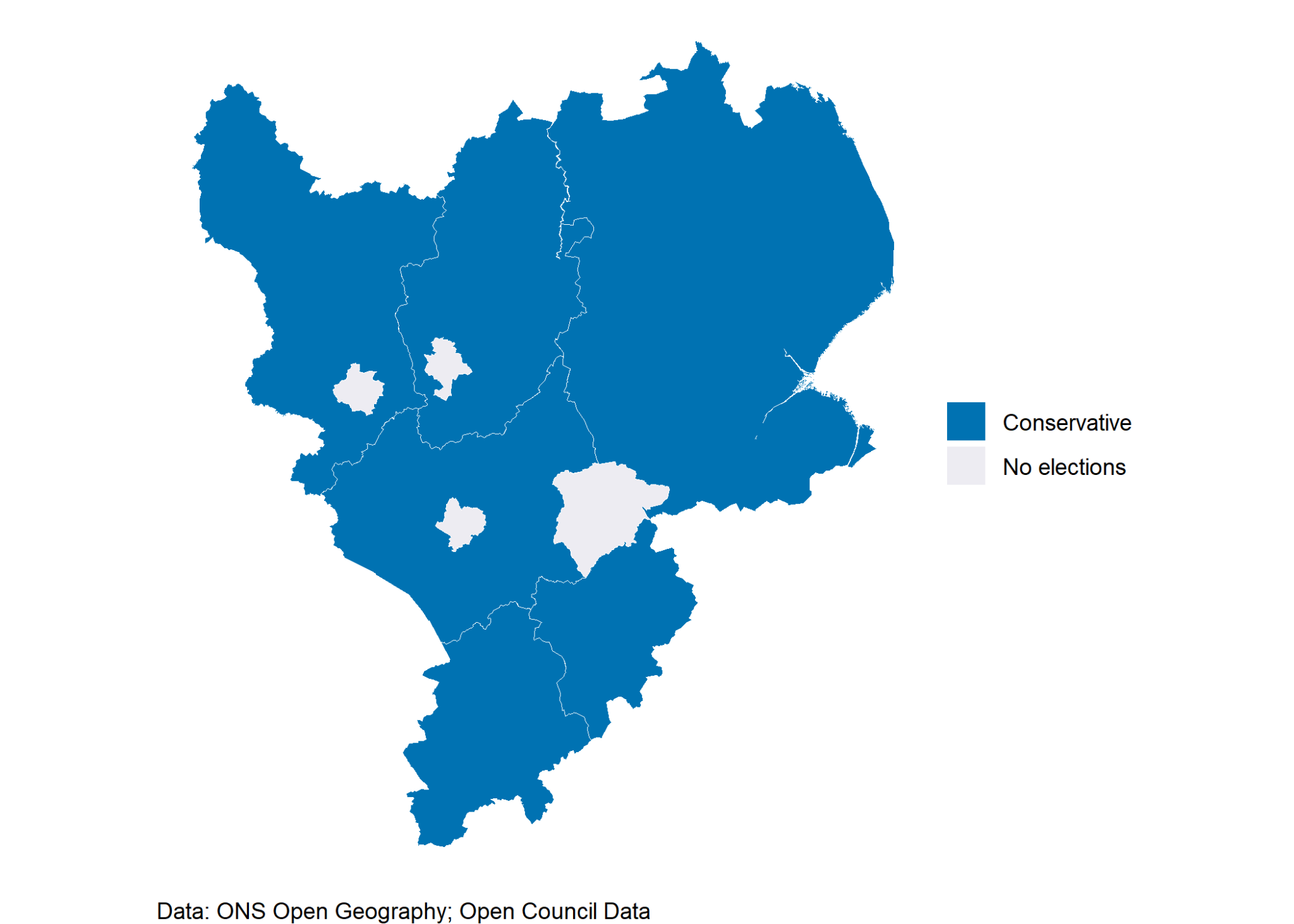
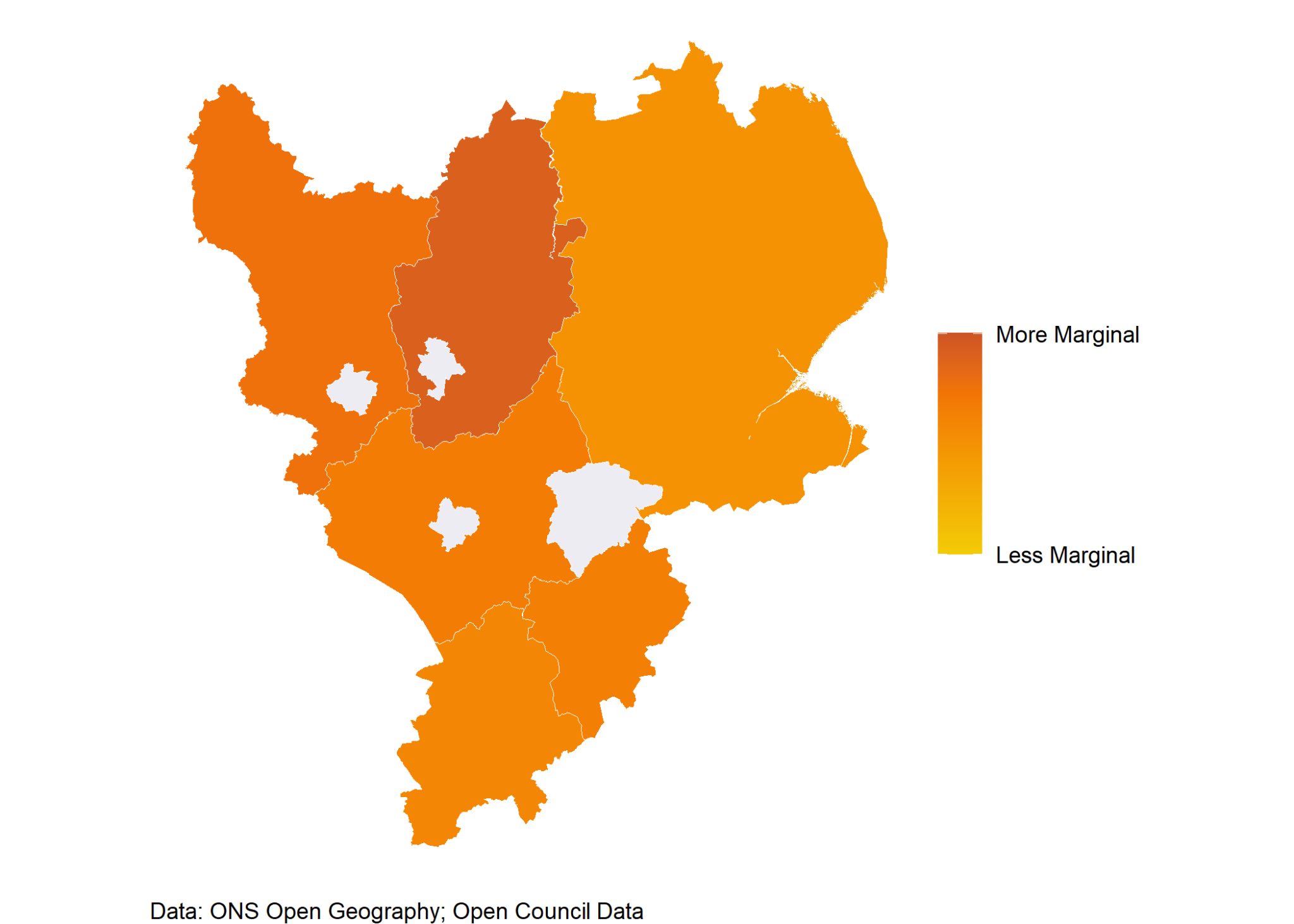
There are a few more contests in the East Midlands, nearly all of which the Conservatives are looking to defend, with the major exception of the new combined authority: the Greater Lincolnshire Combined County Authority, which is electing a mayor for the first time.
First, Nottinghamshire is the least secure of the East Midlands counties in terms of seats, where the Conservatives are ahead by only a handful. Despite the fact their majority is small (small enough that in various places online they are listed as a minority), their opposition is divided between Labour, a strong local independent party (the Ashfield independents) and a smattering of other independents and Reform UK. Although Reform has only a single councillor for now, Lee Anderson’s victory in Ashfield as an MP means many eyes will be on their successes at the county level.
The big question here is whether the Conservatives, who suffered losses in the region at the 2024 general election, manage to hold on against tough opposition from Labour, Reform and independents. Although this simple story may obscure some of the interesting changes behind the scenes, such as the dynamics in Broxtowe, where 20 councillors resigned from the Labour party in early 2025 causing the party to lose control of the council, or the ongoing legal case against the leader of Ashfield District. For an excellent rundown of the year ahead in Nottinghamshire politics, including a review of what’s at stake at the county level, see this article from Nottinghamshire Live.
In Derbyshire, like all the other counties in the East Midlands except Nottinghamshire, the Conservatives are starting in a strong position. What to watch out for here is whether the Labour party take over, having previously gained control of Amber Valley, Erewash, North East Derbyshire, High Peak and South Derbyshire in the 2023 council elections, and performing very well in the county at the general election, Labour has momentum in the area. But given Labour’s fall in the polls since last July, and Reform UK’s second-place finish at the general election in Amber Valley, Reform will also have their eyes on the council. Derbyshire is one of the many places this year where the future organisation of the council is uncertain, with several different plans circulating for reorganising the county.
Leicestershire County has been under Conservative control since the early 2000s, and in terms of numbers, their lead looks unassailable. However, they have lost control of several districts in the county in the last few years: Charnwood, Harborough, Melton, and North West Leicestershire, which may indicate a change of political fortunes. That said, there is not an obvious single challenger party. The Liberal Democrats control Hinckley and Bosworth council, and came second in the parliamentary constituency at the most recent general election, as well as having the second-most seats on the county council at the moment, so they may seek to capitalise. Labour’s gain at the 2024 general election in North West Leicestershire could indicate a chance for them to gain a few more seats on the county council (where they currently have four, so plenty of room to grow). These elections, against a backdrop of debates over reorganisation, are certainly ones to watch to read the runes on the future of the county.
The two unitary councils of North Northamptonshire and West Northamptonshire both have similar compositions going into these elections: large Conservative majorities with smaller Labour groups in second place. Labour made significant gains in the region at the general election, winning Wellingborough, Kettering, North and South Northampton, and several more across the two unitaries, all from the Conservatives. Reform UK also had strong showings at the general election, and will be hoping to pick up seats in both, particularly North Northamptonshire, where they already have several council seats.
The last council with elections in the East Midlands is Lincolnshire County, where at the time of writing the Conservative party has 53 of the council’s 70 seats. Way back in the mid-2010s, UKIP used to perform well at the county level in Lincolnshire, and the recent Reform UK win in the Boston and Skegness constituency in the 2024 general election will leave some wondering if they might challenge the Conservatives’ dominance. The strong Boston Independent party that leads the council there may complicate the political dynamics at play, given they did not run a parliamentary candidate, as always the local context is essential. As with many other county authorities, we also cannot ignore the prospect of reorganisation, where several plans have been drafted that may result in significant changes to how the structure of councils works across the county.
Next, we have the very newly formed mayor of the Greater Lincolnshire Combined County Authority. Made up of North Lincolnshire, North East Lincolnshire and Lincolnshire County, the combined authority is a combination of upper-tier authorities without district-level representation, as is the case with other combined county authorities. Although we don’t know everyone standing for the mayoral seat yet, the choice of Dame Andrea Jenkyns, a former Conservative MP, as the Reform UK candidate for the mayor of Greater Lincolnshire, has already promised to make this an interesting race. She is up against the Conservative candidate Rob Waltham, who has been leader of North Lincolnshire council since 2017. It remains to be seen who will succeed in this interesting new development in the politics of the region, but Reform’s choice of candidate is a clear indication that they have high hopes of success.
North East
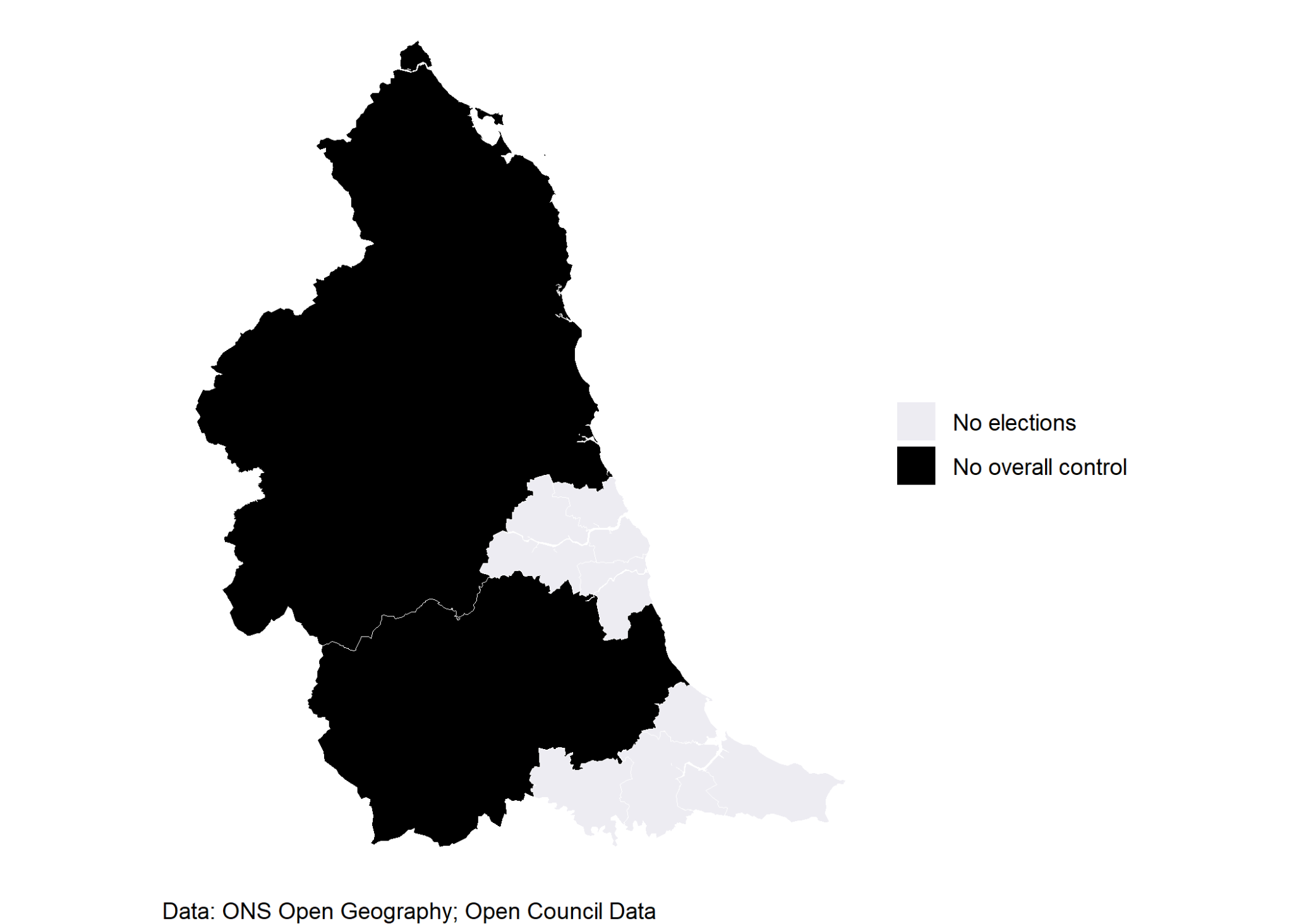
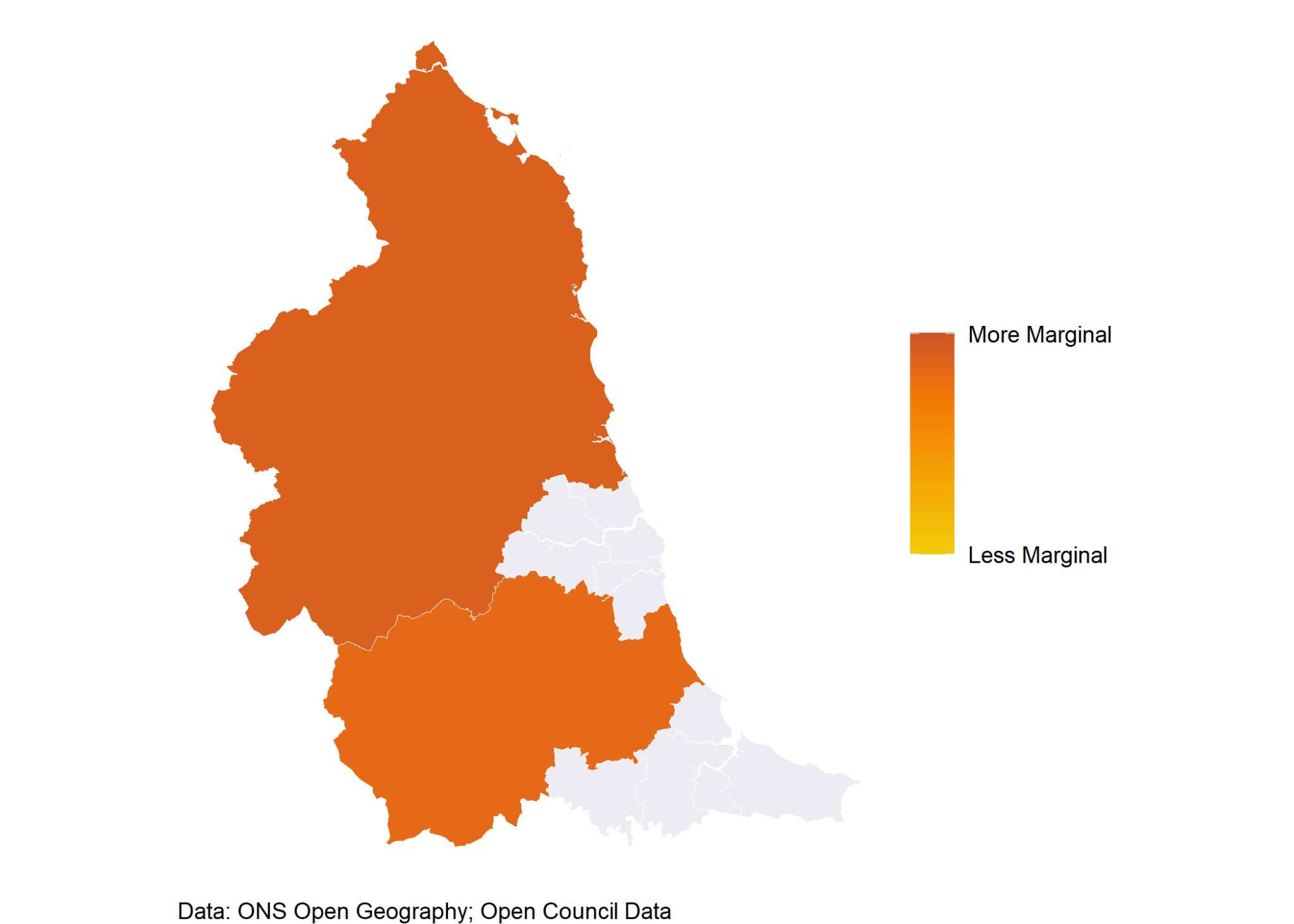
There are only a small number of elections in the North East, but they are still definitely worth watching. Both of the council elections are essential for seeing the strength of the Labour party. First, we have the election in Northumberland of the unitary council that is confusingly called Northumberland County Council. No party has a majority at the moment, and the Conservatives will be looking to hold on against Labour, Reform and local independents. If it is a good night for Labour, they will take the council alone, but the fact that Reform came second in many Northumberland constituencies last year means we should also keep our eyes open to see how well they fare at the council level.
Then, we have another unitary election at the equally confusingly named unitary Durham County Council. At the moment, Labour has the largest number of councillors but the administration is made up of a truly multiparty coalition of Liberal Democrats, Conservatives, independents, local parties and the Green Party. Labour will be aiming to take the council, which they had previously held for a century until 2021, especially considering their strong performance at the general election in the council area, where they won every seat. Although, in second place in many of those same seats was Reform, so worth watching their performance too to see if they manage to break through.
Finally, there is a contest for the directly elected mayor of North Tyneside. Incumbent Labour mayor Norma Redfearn is not seeking re-election. Labour has a commanding lead on the council, where they won 51 of the 60 seats just last year, so a change in political fortunes here is unlikely. But Reform, who did well in constituencies like Cramlington and Killingworth, and Newcastle upon Tyne East and Wallsend, may be looking to challenge Labour.
North West
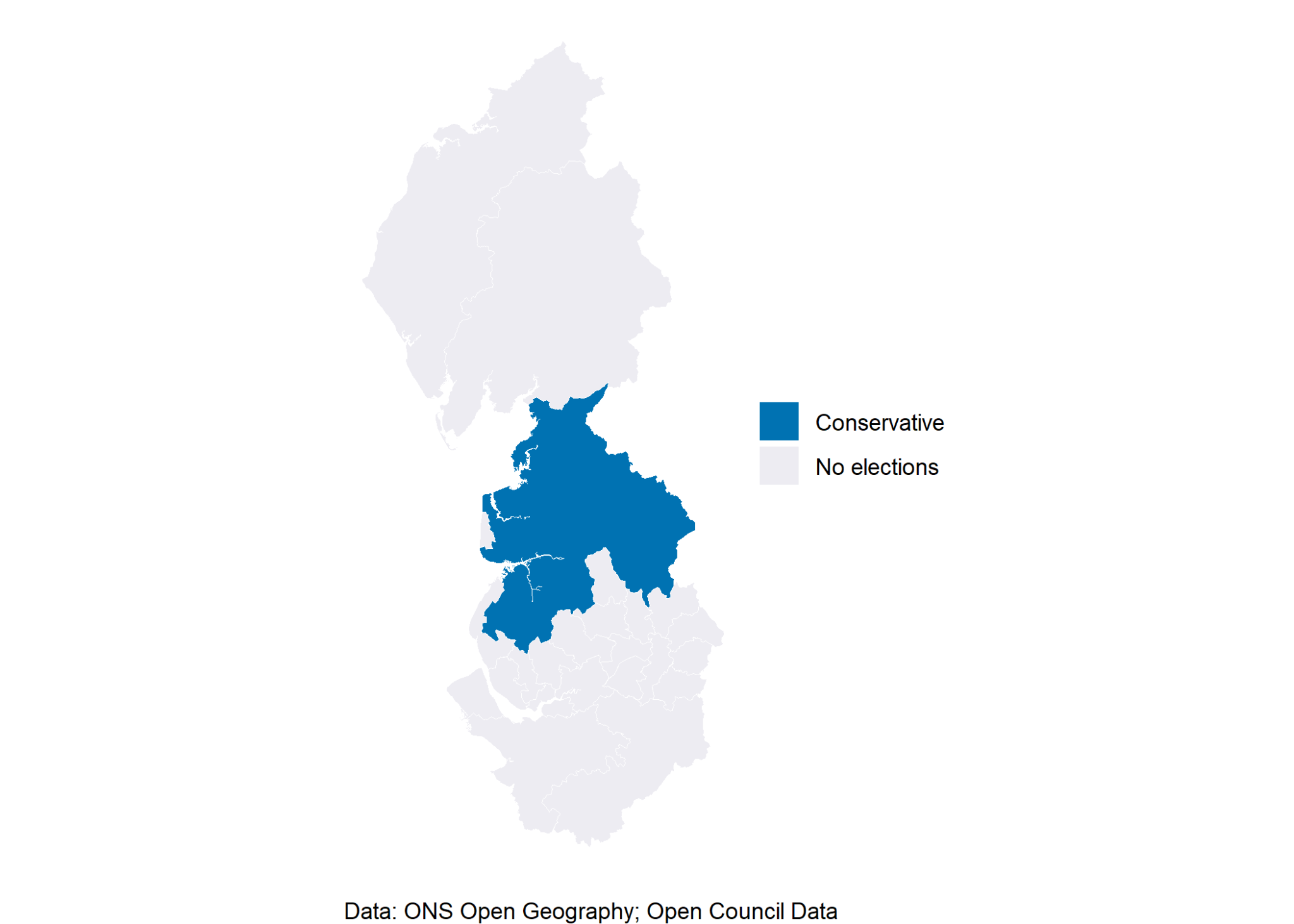
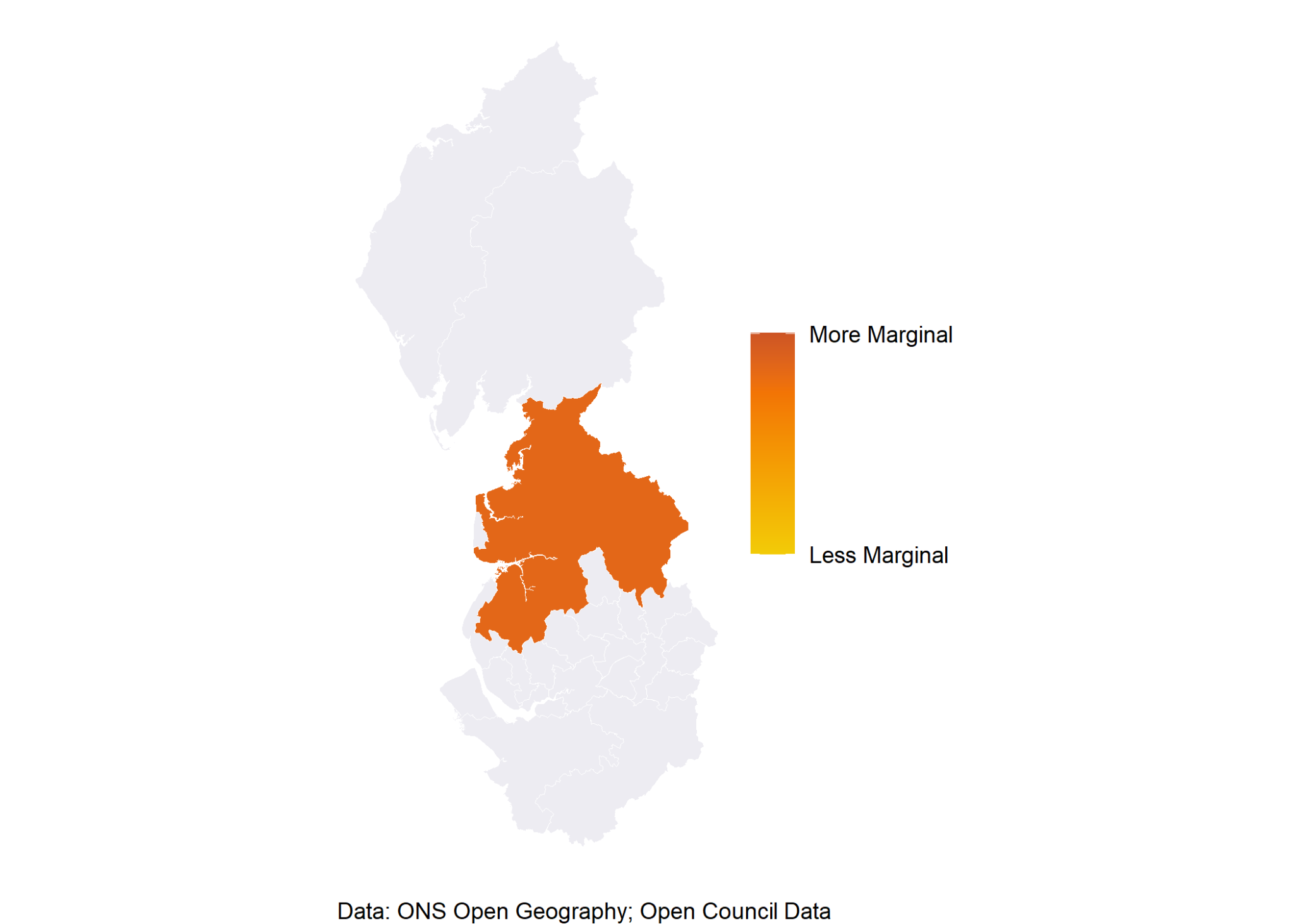
There is only a single council up for election in the North West – Lancashire County Council, which has been under Conservative control since 2017. The Conservatives only have to lose a few seats to lose control of the council, which would follow a trend of losing councils in the region such as Ribble Valley and Pendle in recent years. Optimism for Labour based on their victory last year in Hyndburn may be tempered by the prospect of strong independent or Reform showings. According to a BBC news piece, several councillors across the county, including the leader of Ribble Valley, have joined Reform recently, so there will be plenty of eyes on their success at the county election.
South East
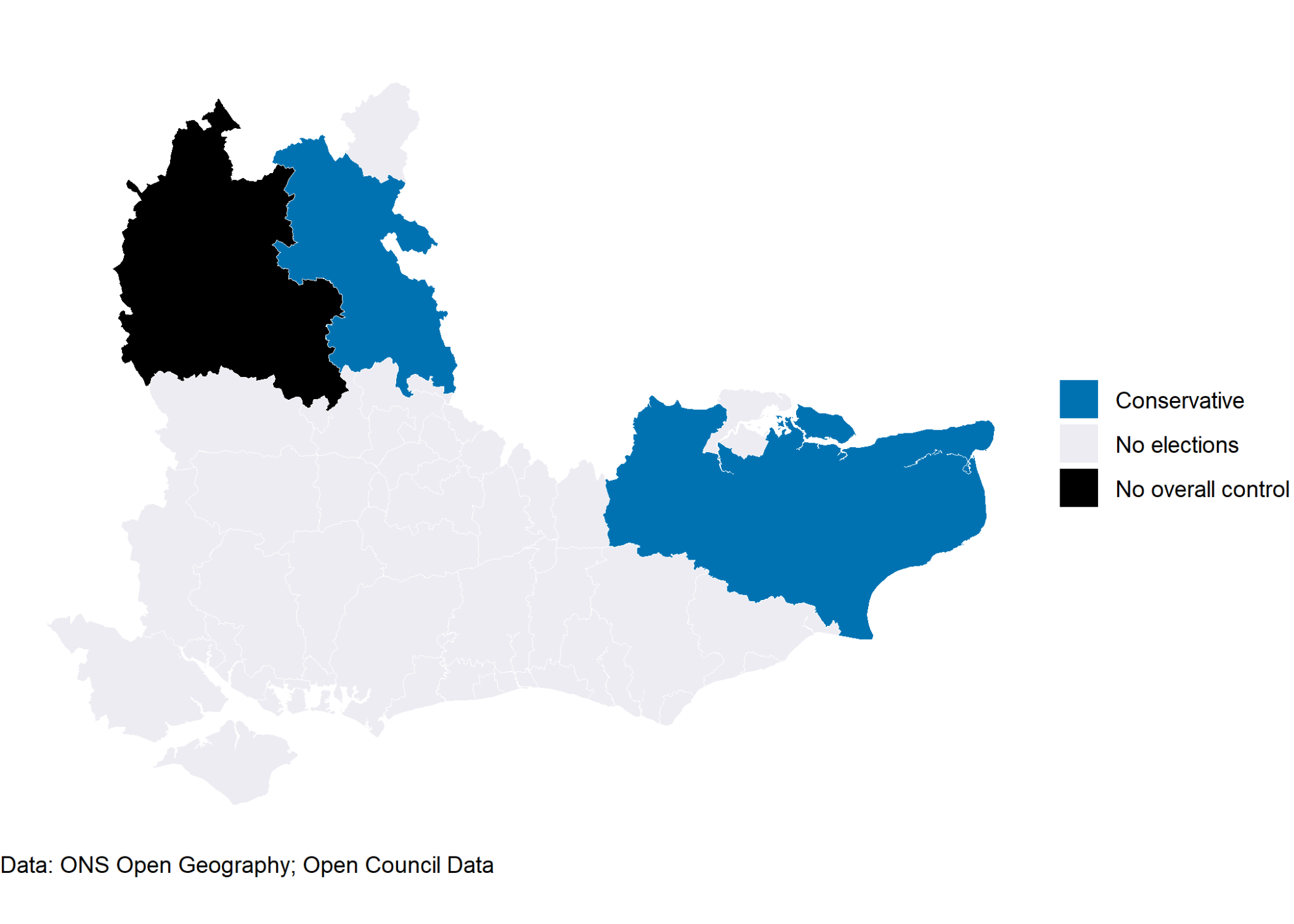
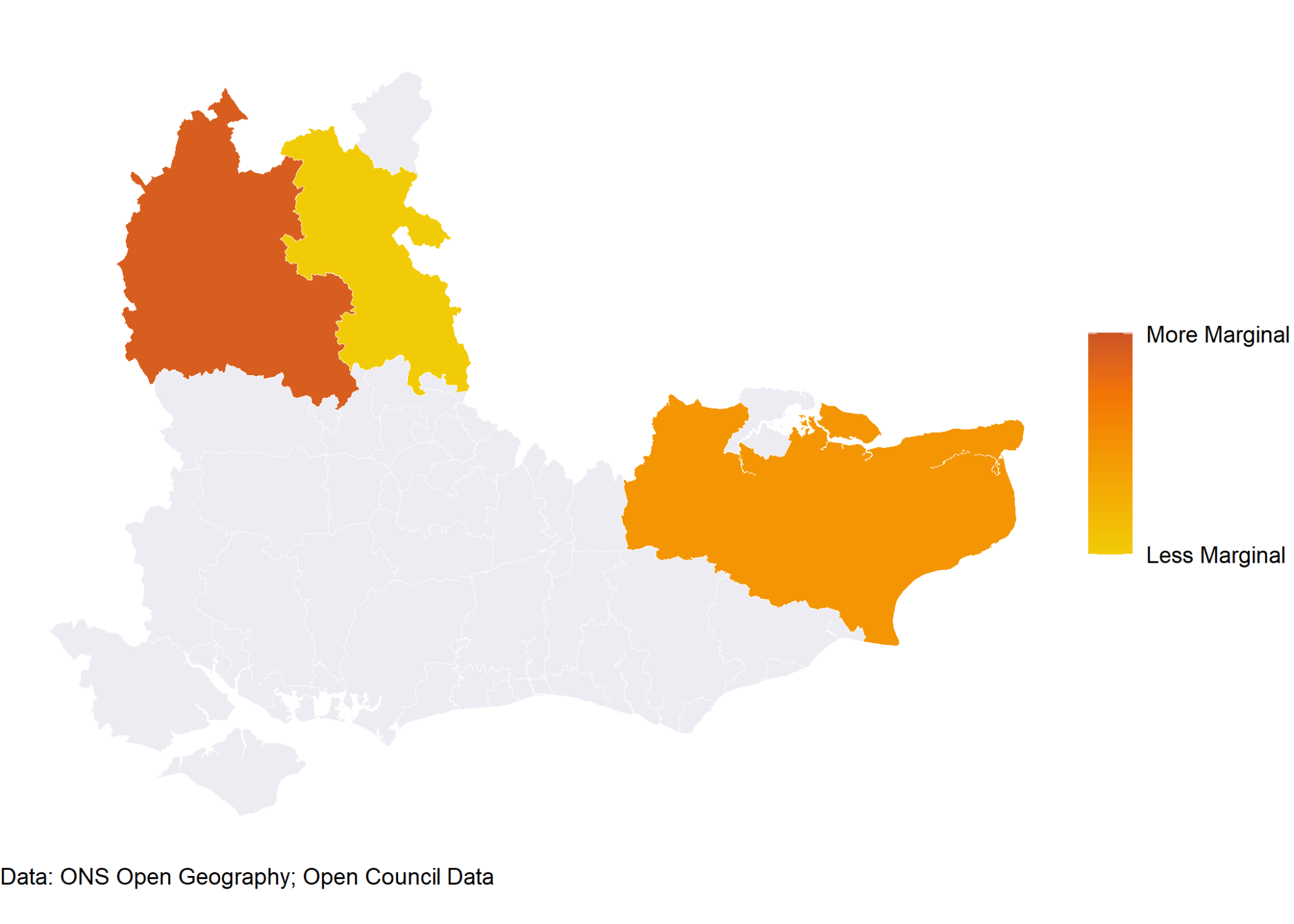
There are only a small number of contests in the south east. The first, and closest, is Oxfordshire, where the Conservatives, Labour and the Liberal Democrats are all within a few seats of one another. At the moment, the Liberal Democrats are governing with the support of other parties but will be looking to take over the county council after a very strong showing at the general election and picking up seats in districts like Cherwell, West Oxfordshire, South Oxfordshire and Vale of White Horse in recent years – often enough to make them the largest party in their respective districts.
Kent County Council is a decidedly different contest. The Conservatives are starting with a healthy majority. But they may feel challenged by the strong performance of the Liberal Democrats in Tunbridge Wells in the recent general and local elections, the independent performance in Ashford a few years back, and most of all their recent losses of control in the City of Canterbury, Maidstone, Gravesham, Tonbridge and Malling, Thanet and Dover. Equally, there is an open question about the potential strength of Reform as a Conservative challenger, since they performed relatively well in places like Sevenoaks and Thanet in the general election, the latter of which used to be a UKIP-controlled council in the mid-2010s, and recent polling puts them in a strong place to win the council. Worth watching to see the strength of the Liberal Democrats and Reform challenging the Conservatives from different angles.
Finally, the unitary council of Buckinghamshire is the least competitive of all the councils with elections this year. At the time of writing, the Conservatives have 105 of the 147 seats on the council, and the next biggest party, the Liberal Democrats, have only 13. However, this does not mean the Conservatives can expect no chance of any losses, especially because these elections will be on new ward boundaries which reduce the total number by over 50. Of the Conservative parliamentary seats in the area, Chesham and Amersham turned to the Liberal Democrats, while Aylesbury and Buckingham and Bletchley went to Labour. The Conservatives are entering the contest with a lot to lose.
South West

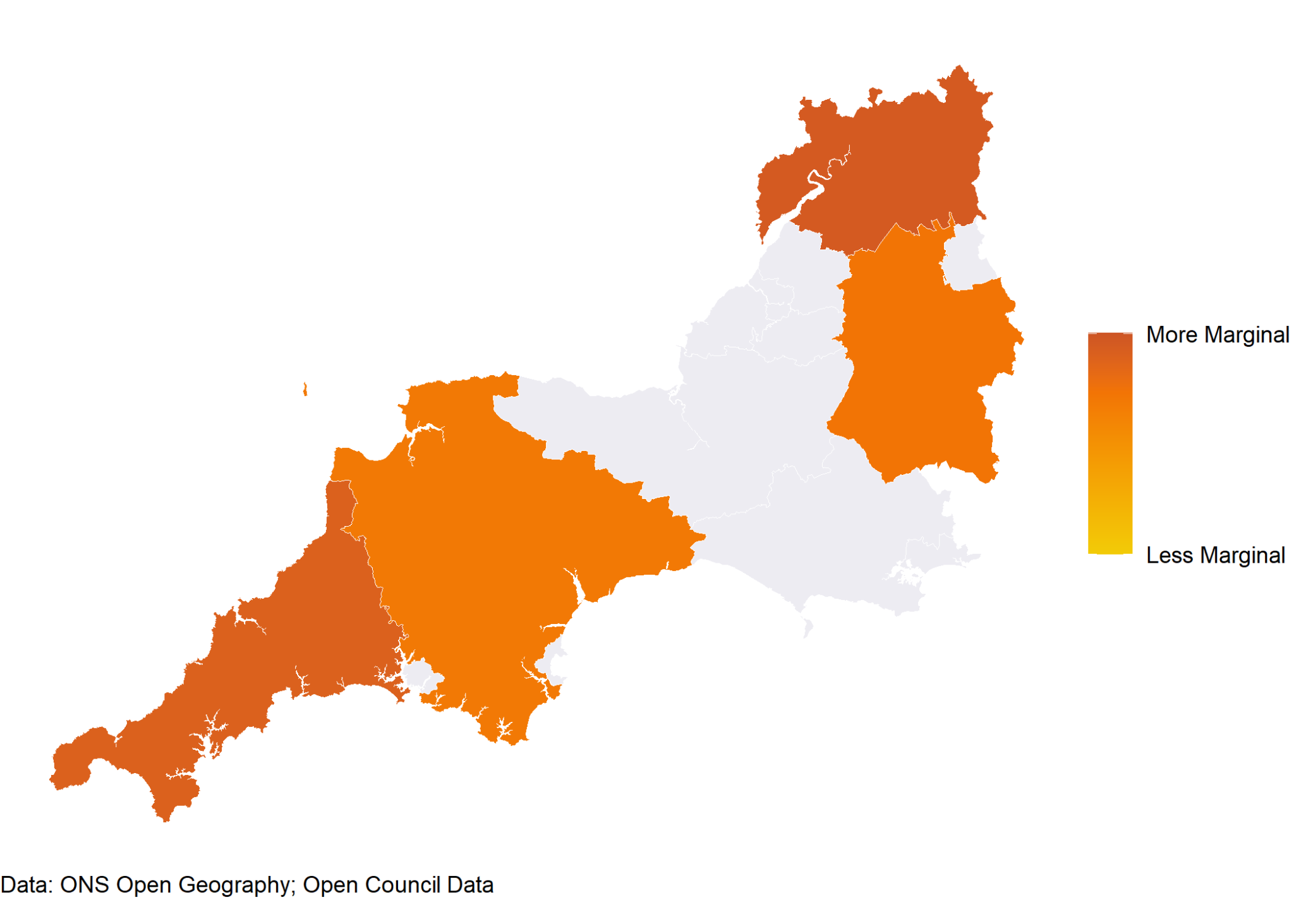
Gloucestershire County Council is a particularly interesting competition for a few reasons. First, the Conservatives have already lost their majority on the council after a few resignations since the last election in 2021. There is space for several smaller parties to do well, including the Green Party, who have governed Stroud District Council as a minority administration since last year and performed well at the Forest of Dean elections in 2023. Also, the Liberal Democrats who are dominant in Cheltenham and knocked the Conservatives off the top spot in Gloucester council last year. If it is a good night for the Liberal Democrats they will win a majority in Gloucestershire.
The unitary council of Cornwall is also a close contest, where the Conservatives won a majority last time, but have lost it after a series of resignations and defections. The Conservative Leader of the council, Linda Taylor has also announced that she will be stepping down. As for who is likely to do well, Labour won several parliamentary seats in Cornwall in 2024, but historically the strongest second party in Cornwall is the Liberal Democrats, who also won a parliamentary seat, and will be looking to take control of the council.
Wiltshire, another unitary council in the region, is another key defence for the Conservatives, who have a majority going in, but will face a significant challenge from the Liberal Democrats, who will be hoping to win more seats this time around after a strong parliamentary performance in Chippenham, Melksham and Devizes and South Cotswolds. The Liberal Democrats will need to win a very significant number of seats to get a majority, especially in an area where the Conservatives did relatively well in the general election – holding onto Salisbury, South West and East Wiltshire, so if they do win here, it would be considered a serious victory for the Liberal Democrats.
Devon is the last county council with elections in the region, and the one where the Conservatives have the largest head start over the other parties. What remains to be seen here is whether they can hold onto their majority – a majority they have had since they took the county council from the Liberal Democrats in 2009. The Liberal Democrats did well in Devon in the general election and won Mid Devon, Teignbridge and South Hams councils back in 2023, so the momentum in the region is on their side. It remains to be seen whether they will succeed, but as with the other councils in the South West, if it is a very good night for the Liberal Democrats they could end up with a full majority.
Finally, not to be forgotten, the mayor of the West of England Combined Authority is also up for election. Labour’s Dan Norris is standing down to stay on as an MP, so the region will have a new mayor no matter what. It’s an interesting contest, covering areas that have recently seen Green successes (Bristol City Council), Liberal Democrat victories (South Gloucester Council and Bath and North East Somerset), and Labour victories across multiple parliamentary seats. Coupled with the rule change to first past the post, it really does remain to be seen who will pick up the majority.
West Midlands
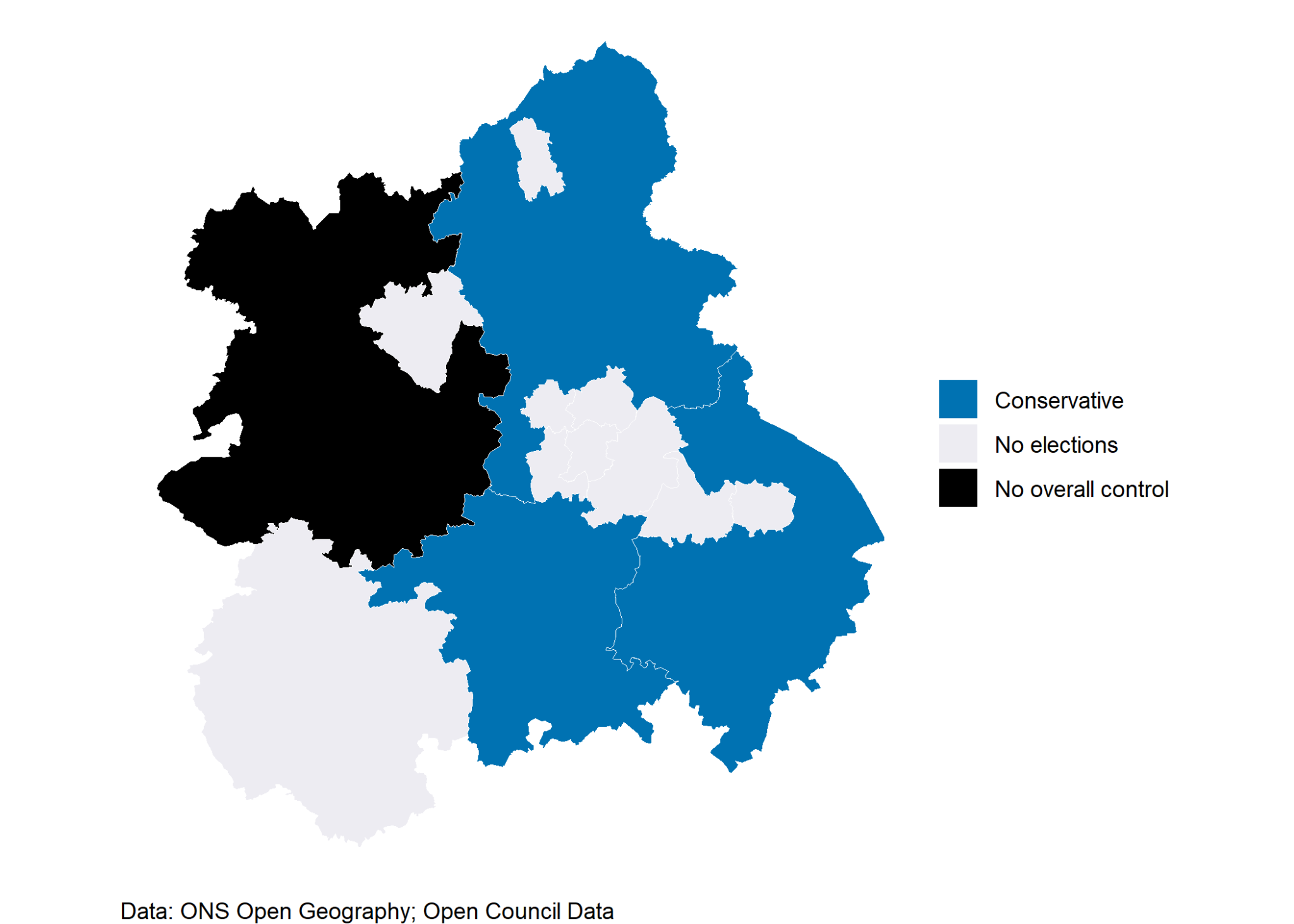
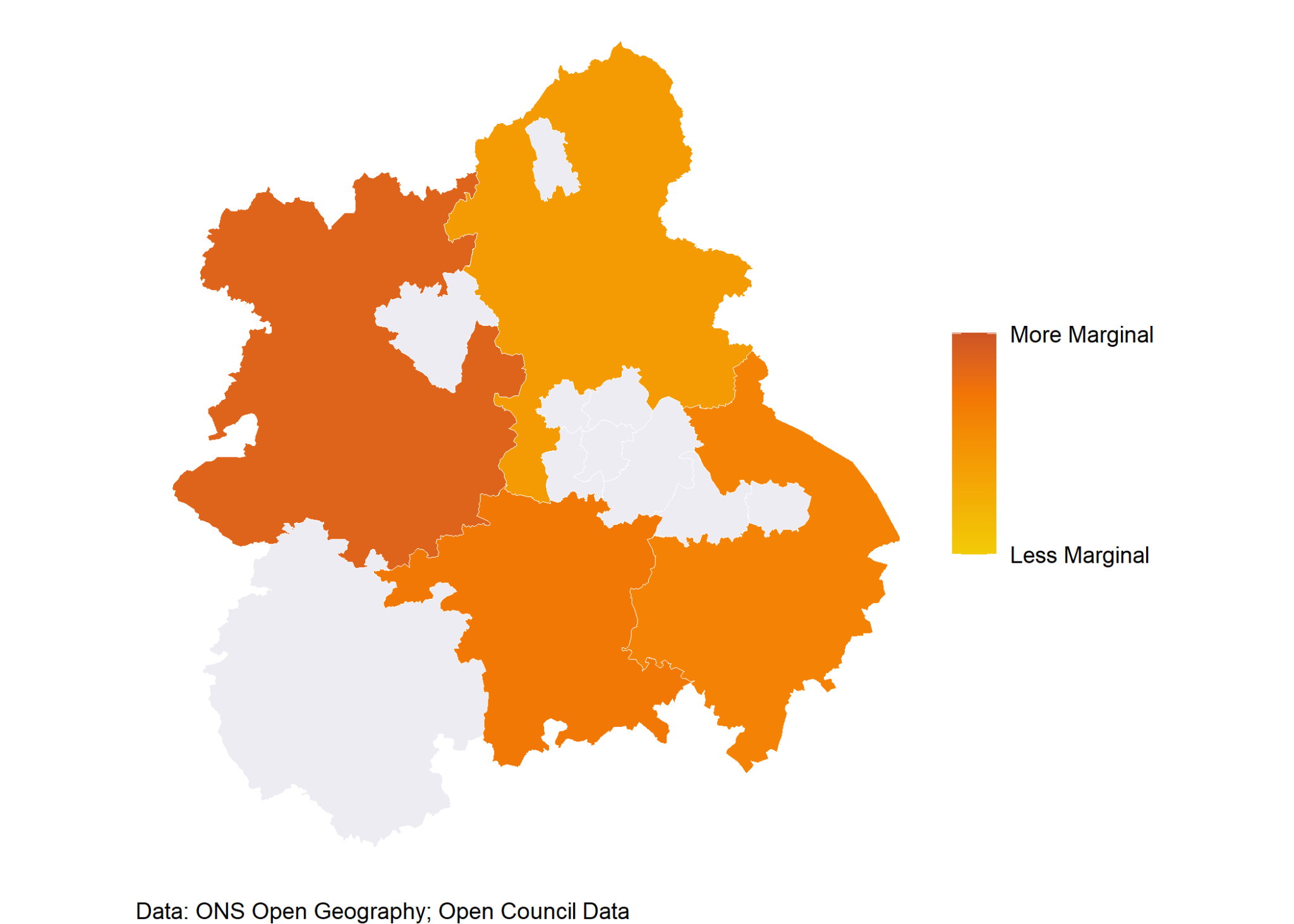
Of the four councils up for election in the West Midlands, the only one not currently under a Conservative majority is Shropshire, where they still have most seats on the council. The Liberal Democrats did well last year at the general election in constituencies like North Shropshire, which they won, and South Shropshire where they came second which put them in a strong place to do well this year. Labour gained Shrewsbury from the Conservatives at the general election so they might also expect to pick up a few seats and Reform UK came second in Telford. Overall though, the fortunes of the wide range of challengers are a secondary question – the first question is will the Conservatives be able to remain the largest party? The Leader of Shropshire Council, Lezley Picton has recently said she will not stand at the elections, citing the potential merger of the two Shropshire councils as one reason. Regardless of which way the election goes, the council will have ongoing financial pressures and reorganisation on the agenda.
Worcestershire County Council, currently run by the Conservatives, is quite likely to stay under Conservative control. But it is worth looking out to see the successes of the Green Party and the Liberal Democrats, who have done well in the area recently, and to see if Labour manage to pick up seats – as they did in Redditch last year. Like many of the councils with elections this year, Worcestershire has reorganisation on the agenda, as well as severe financial difficulties, so these elections are particularly critical for the future of the council.
In Warwickshire County Council, the Conservatives are going into this election as the biggest party by far, and although they lost control of North Warwickshire and Rugby in 2023 and Nuneaton and Bedworth in 2024, they still have a lot of seats to lose before they lose control of the county council to another party. The Liberal Democrats’ strong performance in Stratford-on-Avon, where they won the council in 2023 and the parliamentary constituency last year, should mean they will be aiming for more seats this year than back in 2021. There is an ongoing debate over the future of how Warwickshire will be organised, but the bid to delay elections in Warwickshire was rejected by central government as in many other counties, so the debate is likely to continue beyond these elections.
Finally, Staffordshire County Council has almost no councillors from any party other than the Conservatives, who hold nearly all of the council’s 62 seats. Yet there have been shifts in the region recently. East Staffordshire has been run by Labour since 2023, Cannock Chase and Tamworth since 2024. Although the constituencies in the area were all won by Labour (who picked up a series of new seats) or the Conservatives last year, the great unknown is whether Reform will be able to build on their relatively strong performance to make a breakthrough at the council.
Yorkshire and the Humber

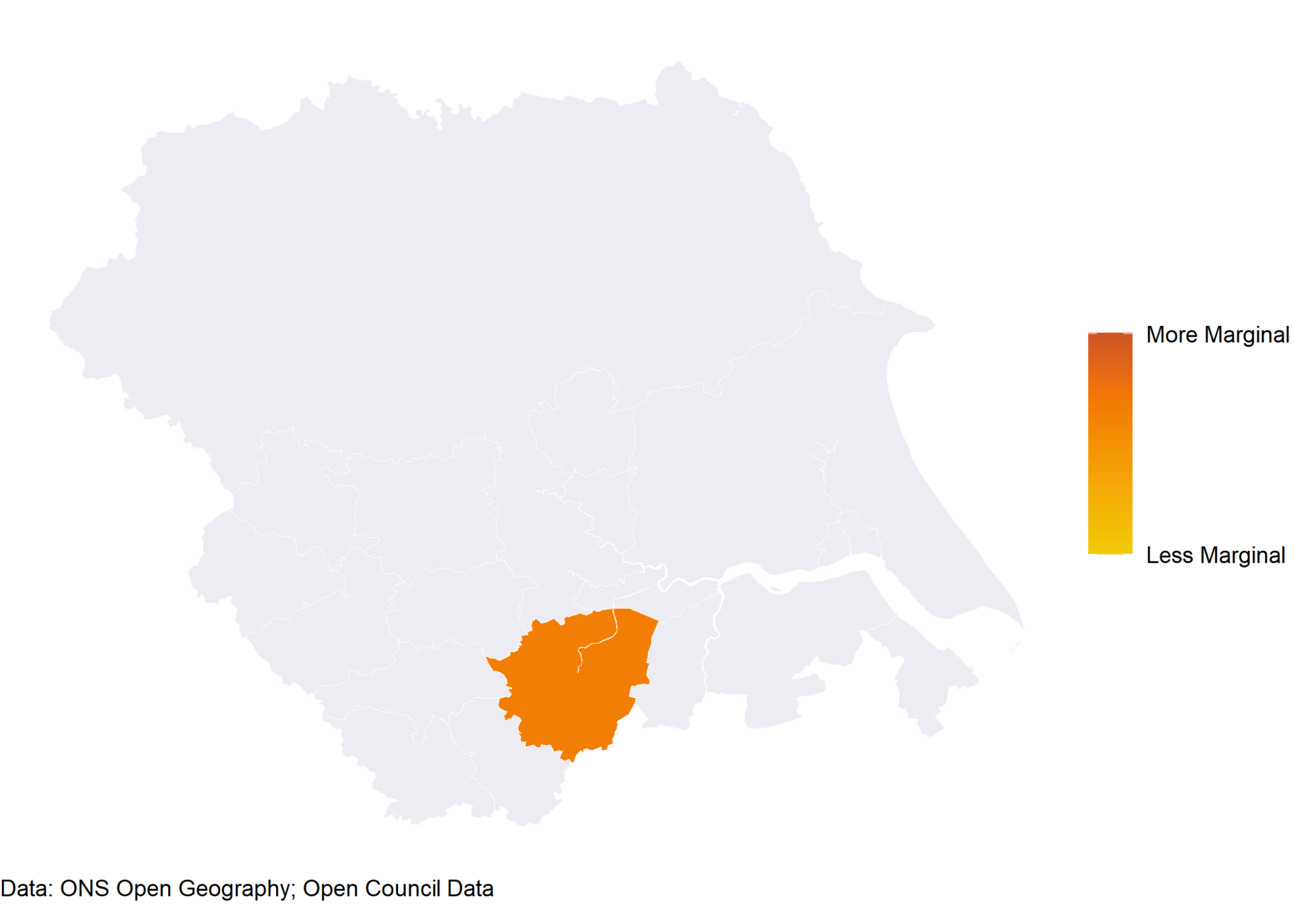
There is only one ‘ordinary’ council election in Yorkshire and the Humber this year, the election in Doncaster which is in the unusual position of electing its full council and directly elected mayor at the same time, as well as being the only Labour defence this year. Labour has a large majority in the council and won every constituency in the area last year, so their defence should be assured. Only the strong Reform performance in a constituency like Rawmarsh and Conisbrough, coupled with some recent polling may be giving Labour reason to be concerned about Doncaster.
Finally, there is another new mayoral contest in Hull and East Yorkshire, a combined authority made up of Kingston Upon Hull City Council and East Riding of Yorkshire Council. This new combined authority mayoral race is widely being seen as an opportunity for Reform, who came second in several Hull constituencies last year and where they have chosen the former boxer Luke Campbell as their candidate. However, the Liberal Democrats control Hull City Council and have a strong showing on East Riding of Yorkshire Council, Labour won all the Hull constituencies and the Conservatives all the East Riding councils, so it would be quite a long shot to imagine that there is no competition in the region.
Technical note and data sources
The data for this project has been collected from council websites, the Open Council Data service, wikipedia and other relevant websites linked in the text. The graphs were made using geographical data sourced from the ONS licensed under the Open Government Licence v.3.0, and coded using the statistical programming language R with the following packages: leaflet; sf; rgdal; htmlwidgets; htmltools; tidyverse; rvest; stringdist; stringr; geojsonsf; raster.
More from LGIU
Devolution and local government reorganisation (LGR): the essentials
This collection of LGIU resources provides LGIU members with all of the devolution and LGR essentials that they need right now. This is a fast-moving area and this collection is regularly updated so that it remains an indispensable guide to the transforming local government landscape. Discover the collection.
2025 State of Local Government Finance in England
LGIU’s 12th annual finance report surveys council leaders, chief executives, section 151 officers and cabinet members for finance to gauge how confident the sector is feeling about the sustainability of council funding The findings illustrate how local government reorganisation and rises in National Insurance Contributions represent additional challenges for a sector that is already in a state of crisis management. Read the full report
Local Elections England: 2025
In LGIU’s local elections one-stop-shop you’ll find commentary, analysis and insight into the council, combined authority and mayoral elections taking place on 1 May 2025 in England. The resources are updated in the weeks running up to polling day and we will be analysing the results post-election. Explore the resources.
Future Local Lab
Launched in January 2025, Future Local Lab is a holistic programme of resources to help local government prepare for and respond to the emerging challenges facing the sector internationally. From embracing the opportunities of new technology to tackling the threats of climate change, join us for ideas and inspiration. Explore the Lab and sign up.
Was this article helpful or relevant for you?