Local Government Explained
Key takeaways of LGIU’s Chief Executive Knowledge Exchange 2025

Beatrice Makeig
This week LGIU hosted a two-day Chief Executive Knowledge Exchange, bringing together leading authorities on economic development to unpack some of the pressing challenges affecting the future of local government. These are our top takeaways from the event.
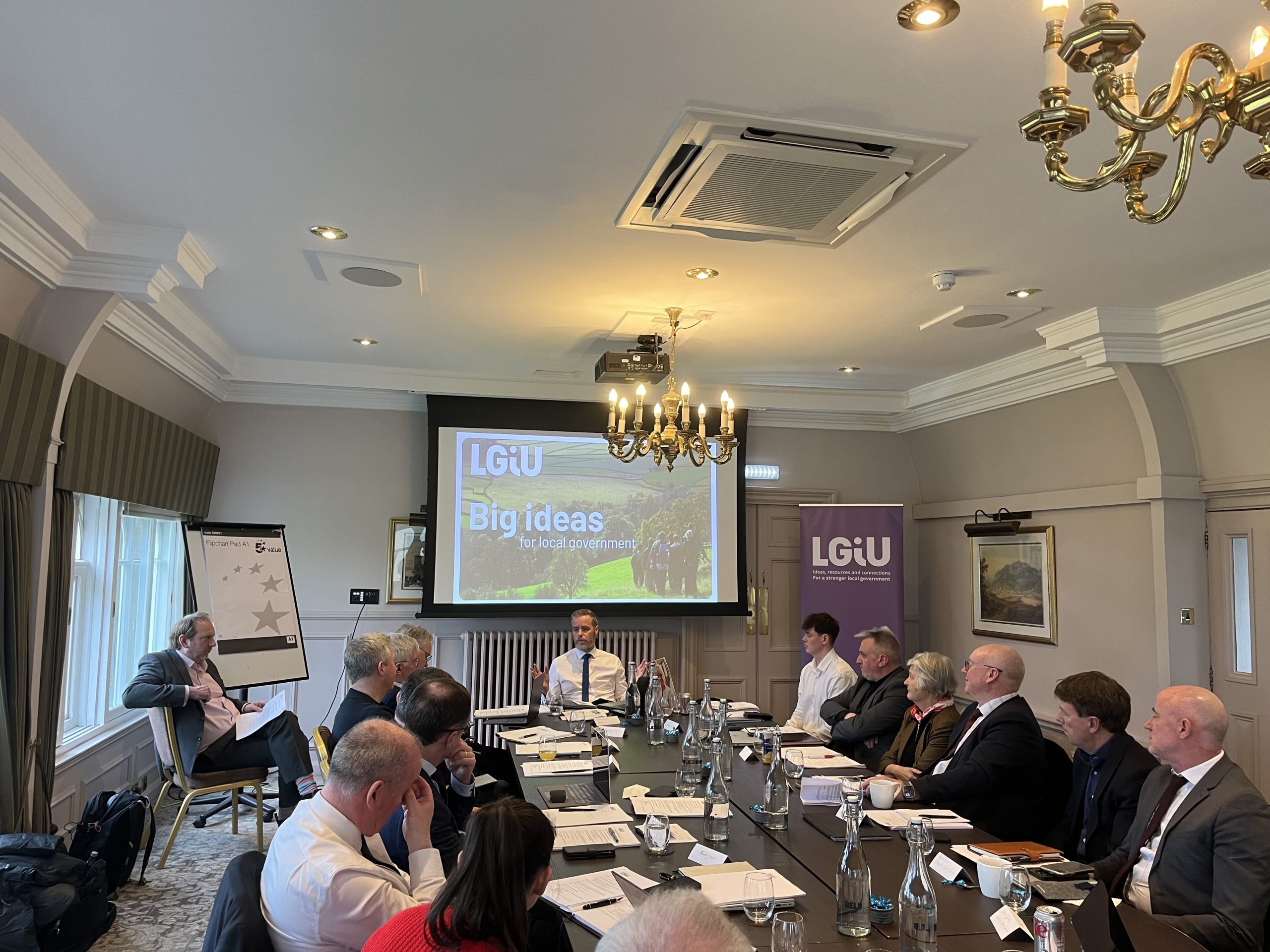
This week LGIU hosted a two-day Chief Executive Knowledge Exchange, bringing together leading authorities on economic development to unpack some of the pressing challenges affecting the future of local government.
The wealth of valuable insights and experiences shared within the room made for an in-depth and collaborative discussion – where it was evident the challenges and opportunities local government faces knows no borders. It is difficult to summarise the two days concisely, however, the key takeaways can be condensed into four main areas: 1) the changing role of local government in society; 2) is local government structured for placemaking?; 3) Partnerships and their role in the future of local government; 4) systems thinking in local governemnt leadership. .

The changing role of local government in society: how can we learn from each other when it comes to people, place and power?
Local government’s role in society is changing, with economic development at the forefront of this transformation. LGIU’s Chief Executive Jonathan Carr-West opened day one spotlighting people, place and power, as the three lenses of local government’s role in economic development. When it comes to future-proofing local government’s role in economic development it is integral to understand your local authority area under each of the three lenses. Only through this approach can local government identify the common challenges and roadblocks facing them. As Robert Burns, Monaghan County Council Chief Executive, summarised, by understanding your local authorities people, place and power, you gain invaluable knowledge, leveraging the unique connection local government holds with its communities.
The ways in which local government can learn from each other when it comes to people, place and power, were demonstrated throughout the event and are emphasised in the other three takeaways.
Is local government structured for place-making?
Place-making plays a vital role in shaping local communities and economies. In day one’s knowledge exchange session, Ken Gourlay, Chief Executive of Fife, spoke of the role of councils in prioritising well-being when developing place-based solutions. This theme continued during the Fife site tour on day two, providing valuable insights into Fife’s innovative approach to place-making.

During the Fife tour, hosted by Ken Gourley and Paul Vaughan, Head of Communities and Neighbourhoods at Fife, we had the privilege of learning about Fife’s place-based and smart city approach for the City of Dunfermline. Presented by Morag Miller, Service Manager at Fife’s Eden Campus, we learnt how the Council embraced a place-based approach after Dunfermline was awarded city status in 2022.
To compete against larger Scottish cities like Edinburgh and Glasgow, Fife Council engaged with the community through lighthouse projects to identify Dunfermline’s unique selling points. This collaborative approach helped Fife develop a transformative strategy, leveraging existing strengths in historical heritage, cultural attractions and natural environment, to enhance local quality of life and attract visitors. As a result, Fife is able to implement data-driven decision-making for the city, and drive innovation in the economy and society. Morag’s presentation, alongside insightful contributions from Ken and Paul, on the strategic and integrated approach, underscored to other leaders in the room the importance of understanding people, place and power first and foremost, and leveraging the uniqueness within that.
Partnerships: the future of local governance?
An ongoing theme across both days was the significance of partnerships in local government. Developing and utilising partnerships, and whether the relationship between functions and partnerships is aligned, is a clear opportunity local government leaders see for place-making.
The value of partnerships was also made clear during our tour of the Eden Campus of St Andrews University. Eden Campus is a major site project funded through a partnership with Fife Council and the Tay Cities Region Deal – a £700m deal signed in 2020 bringing together public, private and voluntary organisations in the council areas of Angus, Dundee, Fife and Perth & Kinross, aiming to create a smarter and fairer region. The campus hosts a range of development and production projects including 3D printing, pouch cell battery production, carbon capture, sustainable prawn fishing, whisky distillation and the Eden Enterprise Hub – a new business premises being developed to foster new and growing enterprises in the north. The overarching theme across each partnership project is inclusive growth, productivity and innovation.

The benefits of placemaking and economic development through partnerships for Fife Council were abundantly evident at Eden Campus. These benefits include attracting industries to the region, skill development through innovative projects, and climate and societal benefits arising from carbon capture, bioenergy for heating homes, sustainable agriculture and affordable housing development. The holistic approach to working collaboratively has brought significant economic, social and environmental value to Fife and the wider Scotland region, showcasing the potential of well-structured partnerships in local government.


Systems thinking in local government leadership across the UK and Ireland
Sharing and seeking information, and learning from places which look different to yours was a key objective of the knowledge exchange. It’s critical local authorities continue to break these communication barriers and learn from each other, to adopt best practices and address common challenges.
The presentations on day one from Derek Brown, Highland Council Chief Executive, on rural development and Oliver Reid, Chief Executive of Orkney Islands Council, on renewable, highlighted the best practice already being delivered, demonstrating the powerful lessons councils can learn from each other.
The in-depth tours and presentations hosted by Fife on day two, further emphasised the importance of shared learning and systems thinking in local governance. Each location visited sparked thought-provoking conversations, highlighting common challenges, opportunities, and growth areas for local authorities.
During our stop at The Dukes, St Andrews we heard from Hilary Roberts, Lead Tourism Officer at Fife, about the significance of golf tourism, the unique opportunities golf offers Fife, and where the areas for growth and development lie. Connections and similarities around the value of golf tourism across Ireland, England and other regions of Scotland, such as Orkney, facilitated valuable discussions where unique insights on golf tourism were shared between leaders.
Our third stop of the day was Rosyth Forth Port, an integral part of Forth Green Freeport, where Susan Murray, Forth Green Freeport Chief Executive, spoke on the Port’s plans for offshore windfarms and sustainable fuels, which hold immense potential for Fife in terms of investment, job creation and skills development. Again, similarities and shared circumstances were raised during this visit; the core trade skills required in Rosyth Forth Port drew linkages between Scotland’s high demand for apprenticeships and Ireland’s ongoing struggle for employee apprenticeships.

Dunfermline Learning Centre was the last stop on the tour. The centre, which is the largest Passivhaus building in the UK, is an innovative educational hub, providing modern facilities for two local highschools and Fife College. Alan Paul, Head of Property Services and Shelagh McLean, Head of Education & Children’s Services, guided us through the campus. The immersive site visit offered valuable lessons on creating functional, forward-thinking educational environments, leaving a lasting impression on the importance of thoughtful design choices and innovative facilities in educational, youth focused spaces.

Final remarks
The two-day event reinforced the importance of systems thinking, communication and collaboration in local government leadership. By learning from diverse regions and initiatives, leaders can collectively drive growth, address common challenges and foster innovation in their respective communities. The wealth of knowledge shared and the rich discussions that took place over the two days are just the beginning. LGIU is committed to building on these insightss and facilitating more opportunities for learning, collaboration and growth for local government leaders. Stay tuned for what comes next from LGIU.
Was this article helpful or relevant for you?